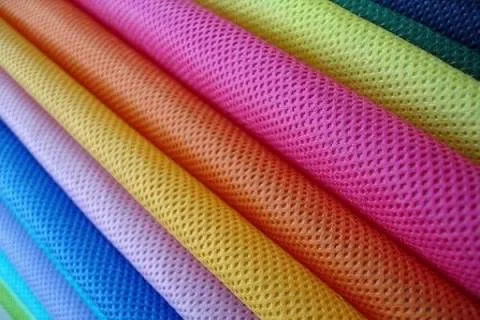
What GSM measures
GSM means grams per square metre. A nominal 80 gsm fabric weighs 80 grams per square metre. It does not directly describe thickness, tensile performance or filtration efficiency.
Calculate theoretical roll weight
Fabric weight (kg) = width (m) × length (m) × GSM ÷ 1,000. For example, a 1.6 m wide, 1,000 m long roll at 50 gsm has a theoretical fabric weight of 80 kg. This is an arithmetic example, not an available stock specification.
Calculate length from net weight
Length (m) = net fabric weight (kg) × 1,000 ÷ [width (m) × GSM]. Use net fabric weight, excluding the core and packing. Clarify whether a quoted weight is net or gross before converting prices.
Why equal GSM can feel different
Composition, structure and bonding can differ. Equal basis weight does not necessarily mean equal thickness or stiffness. Keep a reference sample and run a converting trial when changing material sources.
Allow for tolerances and waste
The formula gives a theoretical value. Agree basis-weight tolerance, usable width, length measurement and cutting waste. Purchased area can exceed the area used in finished products. A calculation is not a guaranteed production yield.
State the purchasing units
Include material type, target GSM, usable width, quantity and unit. If buying by weight but converting by length, clarify how core and packaging weight are treated. Align the units before comparing quotations.
Estimate fabric roll weight
Enter width, length and GSM to calculate theoretical fabric mass, excluding the core, packing and waste.
Weight (kg) = width (m) × length (m) × GSM ÷ 1,000. Inputs are for calculation only, not stock specifications or a production-yield commitment.
Frequently asked questions
Does higher GSM always mean stronger fabric?
No. Consider the structure and relevant performance tests for the application.
Does 80 gsm mean 0.8 mm thick?
No. GSM is mass per area; millimetres measure thickness. There is no universal fixed conversion.