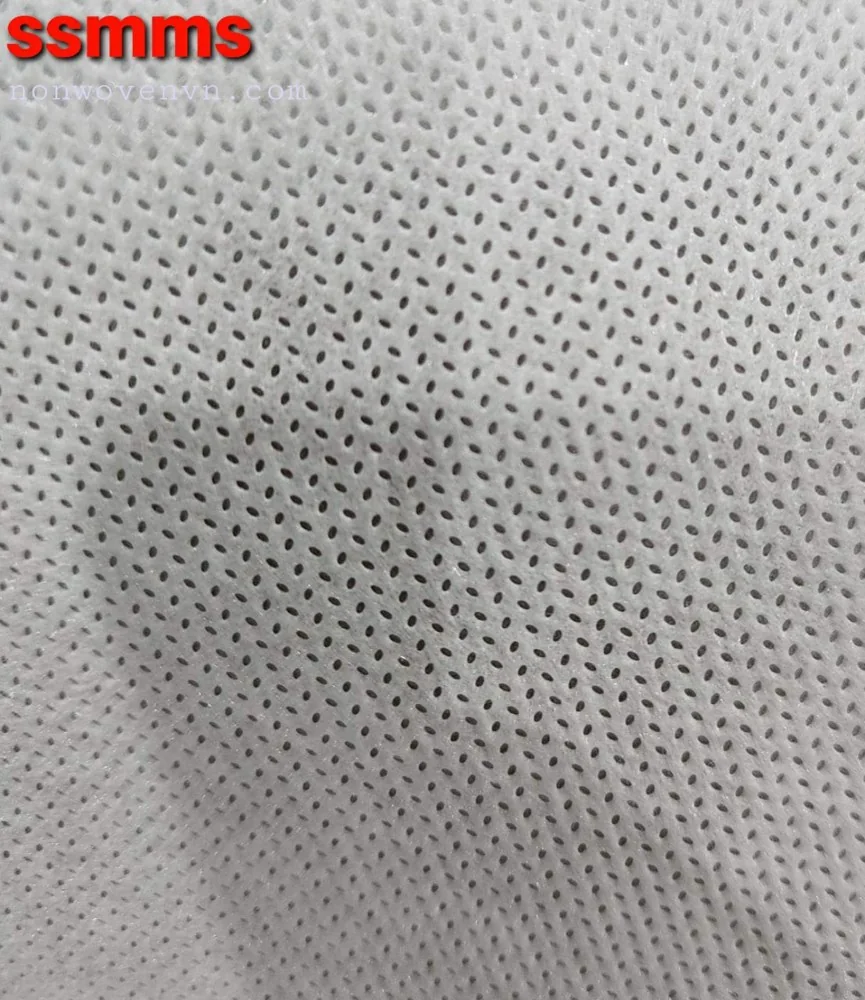
SSMMS Nonwoven Fabric
SSMMS combines spunbond and meltblown layers. For hygiene or protective products, establish the role of the material and the testing requirements of the finished product before selecting a specification.
Quotation based on specification and quantity
View specification details ↓Specifications to agree
| Material family | SSMMS nonwoven |
|---|---|
| Raw material | Polypropylene (PP) |
| Supply format | Rolls |
| Width & basis weight | Agree for the product design |
| Technical documentation | Request records for the exact material code |
| Intended applications | Hygiene / protection, subject to application assessment |
Choose the structure for its intended function
SSMMS identifies a structure, not every performance characteristic of a particular roll. Establish which layer of the finished product it will form, its service environment and the converting process. Different configurations can exist within the same material family.
Review the documentation before deciding
Request the specification sheet, test methods and relevant reports for the material actually being offered. Check the material identifier, sample scope, test conditions and report date. A result from another sample should not be treated as proof for the batch being purchased.
Approve samples under actual converting conditions
Evaluate cutting, sewing or welding as applicable rather than relying only on hand feel. Record machine settings, wrinkling and joint quality. Medical-use finished products require a separate assessment against their applicable requirements; the material name alone is not evidence of compliance.
Frequently asked questions
Does SSMMS automatically meet medical requirements?
No. Identify the requirements for the finished product and verify relevant documentation and test results. The structure name does not replace this assessment.
What should an enquiry include?
State the end use, layer position, target basis weight and width, testing requirements, quantity and destination.
Related products
Let’s define the right material.
Share the intended use, specification, quantity and destination so we can discuss a suitable option.